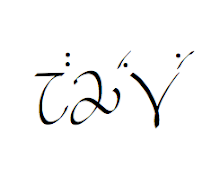
I have mentioned the linguistic genius of the writers of Modern Family before. Well, they've done it again with creative blending.
In this week's episode, Phil couldn't figure out why Claire (his wife) is upset with him. So as she leaves the house, he shouts, "Happy Valenbirthiversary!"
I dare you to come up with a better blend.

Showing posts with label new words. Show all posts
Friday, February 25, 2011
Friday, January 14, 2011
Say what?
As some words are vanishing (or being banished or being threatened to be banished), new words are being created to fill their void. Some are more useful (and meaningful) than others, but all are welcome to the English language. Or are they?
Below is an apology written by Ricky Romance after threatening to shoot Chris Brown:
The letter is reprinted on the SPOGG Blog, which is where I first read about it. My mind is still reeling as I try to figure out all the words perniciously thrown around. In fact, all I can think right now is, "Is he for real?" Oh, that and, "It's accept, not except!"
Signed,
Your Fellow Humgruffin in Linguistics
Below is an apology written by Ricky Romance after threatening to shoot Chris Brown:
I would like to extend my most sincere apologies to the elderly and youth of our nation for my sudden acrasial message of violence towards other individuals of unimportance.
I must eclaircise any misunderstandings that I am a Man of irrational aggression and behavior.In no way am I attempting to justify my actions towards persons of high immaturity levels and hypocritical methods of "becoming a better person," I was wrong.My unexpected reaction to fallaciloquences embellished with deceitful humgruffin cover-ups and unnecessary remarks towards my younger brother enraged me.
I couldn't seem to fathom how a immature nanocephalous adult raglan tailored ex-batman and a jean maillot wearing macrotus, labrose, kazachoc like dancing, woman beater callent could make such comments and pass judgment to an abuse victim.At the moment I was infuriated. Please let my actions be as a lesson as what not to do. You must vastate yourself to aggression and search for other solutions before reacting.Threatening closet coward human beings only leads their tearful plea for restraining orders, desperate cries for help from "affiliating gang bangers", and countless whiney excuses -I.E. "she hit me first!!" to the media and courts, which could possibly result unwanted circumstances.As for the once semi high powered homosexual perverts, molesters and child rapists of the Industry, I vaticinate justice will be brought to you on Judgment Day.I leave this to God though. Please except my apology, obviously knowing the message can always be heard if ears are around . Thank you.- Ricky Romance
The letter is reprinted on the SPOGG Blog, which is where I first read about it. My mind is still reeling as I try to figure out all the words perniciously thrown around. In fact, all I can think right now is, "Is he for real?" Oh, that and, "It's accept, not except!"
Signed,
Your Fellow Humgruffin in Linguistics
Tuesday, August 10, 2010
"To Pull a X"
I am fascinated by the construction "to pull a [insert name here]." As an example, Friends introduced the phrase "to pull a Monica" based on the character (named Monica) who was known in her family for regularly messing up in big situations. "Pulling a Monica" is defined by the Urban Dictionary as "any and all screwups by an individual."
Recently, Steven Slater made the news as the JetBlue flight attendant who, in no uncertain terms, went ballistic on a passenger, chewed said passenger out on the plane's intercom, grabbed a beer from the plane, and exited via the emergency slide. Inspired by this incident, MSNBC.com reports:
Addressing (1) first, I would most likely not--in everyday usage--coin a phrase such as "to pull a Monica" after a single incident of Monica making a mistake. Oftentimes, this phrase requires a repeated behavior rather than a single incident. If Steven Slater had merely quit his job in a more typical fashion (e.g., a resignation letter), then no one would think of calling quitting a job "pulling a Steven Slater." However, if Steven went on to quit his next five jobs in a row, I might be tempted to call quitting a job "pulling a Steven Slater." I had never stopped to consider how "to pull a X" was applied until I read the MSNBC.com article and realized that it takes an extraordinary situation to apply "to pull a X" after only one incident.
Furthermore, I wouldn't typically think of saying "You just pulled a Monica" to someone who has no idea who Monica is or what "pulling a Monica" might mean. Because of that, it seems a little unnatural to think of adding the addendum in natural speech: "You just pulled a Monica: screwing up." In fact, I would think that most typical uses wouldn't merit a clarification clause. Yet, "pulling a Steven Slater", while national news, is new enough that clarification is necessary.
To take consideration of the construction one step further, I find it interesting how we decide to apply the construction. Saturday Night Live dedicated a sketch to "pulling a Peyton Manning" (when you show lots of promise but don't deliver), but I don't often hear phrases with celebrities' names inserted into the construction. For instance, when Tom Cruise jumped on Oprah's couch, instead of saying, "You just pulled a Tom Cruise," we adopted the phrase "You jumped the couch." As another example, when Fonzie jumped over the shark near the end of the Happy Days run, the phrase "to pull a Fonzie" never made it into the language; instead, "jump the shark" became a useful phrase for when something good goes terribly wrong. (The episode in which Fonzie jumps the shark roughly marked the end of the popularity for Happy Days.) Perhaps "pulling a Steven Slater" is only possible because he is not a celebrity but is rather an everyday guy who is enjoying his 15 minutes of fame for his antics.
So now the big question is whether the phrase will stick or not. Do you think you'll remember what "pulling a Steven Slater" is next year? Do you think you'll ever have reason to use the phrase in your own speech?
If any of you have a "to pull a X" example of your own, I'd love to hear about it.
Recently, Steven Slater made the news as the JetBlue flight attendant who, in no uncertain terms, went ballistic on a passenger, chewed said passenger out on the plane's intercom, grabbed a beer from the plane, and exited via the emergency slide. Inspired by this incident, MSNBC.com reports:
Most of us will probably never pull a Steven Slater: curse out a customer, grab a drink and leave our place of employment in a blaze of glory. (article by Allison Linn)I immediately found this interesting for two reasons: (1) less than a day after a singular incident, Steven Slater already has an "event" named after him; and (2) the event is well-known enough to be named a "Steven Slater" yet not well-known enough to be able to use the construction "pull a Steven Slater" without further identifying what that means.
Addressing (1) first, I would most likely not--in everyday usage--coin a phrase such as "to pull a Monica" after a single incident of Monica making a mistake. Oftentimes, this phrase requires a repeated behavior rather than a single incident. If Steven Slater had merely quit his job in a more typical fashion (e.g., a resignation letter), then no one would think of calling quitting a job "pulling a Steven Slater." However, if Steven went on to quit his next five jobs in a row, I might be tempted to call quitting a job "pulling a Steven Slater." I had never stopped to consider how "to pull a X" was applied until I read the MSNBC.com article and realized that it takes an extraordinary situation to apply "to pull a X" after only one incident.
Furthermore, I wouldn't typically think of saying "You just pulled a Monica" to someone who has no idea who Monica is or what "pulling a Monica" might mean. Because of that, it seems a little unnatural to think of adding the addendum in natural speech: "You just pulled a Monica: screwing up." In fact, I would think that most typical uses wouldn't merit a clarification clause. Yet, "pulling a Steven Slater", while national news, is new enough that clarification is necessary.
To take consideration of the construction one step further, I find it interesting how we decide to apply the construction. Saturday Night Live dedicated a sketch to "pulling a Peyton Manning" (when you show lots of promise but don't deliver), but I don't often hear phrases with celebrities' names inserted into the construction. For instance, when Tom Cruise jumped on Oprah's couch, instead of saying, "You just pulled a Tom Cruise," we adopted the phrase "You jumped the couch." As another example, when Fonzie jumped over the shark near the end of the Happy Days run, the phrase "to pull a Fonzie" never made it into the language; instead, "jump the shark" became a useful phrase for when something good goes terribly wrong. (The episode in which Fonzie jumps the shark roughly marked the end of the popularity for Happy Days.) Perhaps "pulling a Steven Slater" is only possible because he is not a celebrity but is rather an everyday guy who is enjoying his 15 minutes of fame for his antics.
So now the big question is whether the phrase will stick or not. Do you think you'll remember what "pulling a Steven Slater" is next year? Do you think you'll ever have reason to use the phrase in your own speech?
If any of you have a "to pull a X" example of your own, I'd love to hear about it.
Tuesday, May 4, 2010
Lexical Gap: Noun for 'Ridiculous'
When we make up new words, our motivation is typically that we have an idea to express but do not have a word for it; thus, we have a lexical gap--a gap where the precise word we are looking for should be. Sometimes lexical gaps are legitimate ones (i.e., our language truly does not have a word to express what we would like to express). Oftentimes, though, lexical gaps are speaker-dependent. There is a word in our language that would work--we just don't know about it, or it doesn't quite sound right for the situation.
For example, the other day I was driving down the road and got stuck behind someone going a good 15 mph below the speed limit. I couldn't go around the car because I needed to stay in the right lane so that I could make a right turn into a parking lot. The car in front of me was already going slow--in and of itself a frustrating experience--but as we got closer to where I needed to turn, the car in front of me kept going slower and slower and slower... until I shouted, "Enough of this ridiculosity!" Yes, road rage gets the best of us. Not only did I shout in my car at the driver in front of me, but I also experienced a momentary lexical gap in my vocabulary.
After my outburst, I started a conversation with myself (I was alone in the car) that went something like this:
For example, the other day I was driving down the road and got stuck behind someone going a good 15 mph below the speed limit. I couldn't go around the car because I needed to stay in the right lane so that I could make a right turn into a parking lot. The car in front of me was already going slow--in and of itself a frustrating experience--but as we got closer to where I needed to turn, the car in front of me kept going slower and slower and slower... until I shouted, "Enough of this ridiculosity!" Yes, road rage gets the best of us. Not only did I shout in my car at the driver in front of me, but I also experienced a momentary lexical gap in my vocabulary.
After my outburst, I started a conversation with myself (I was alone in the car) that went something like this:
Hmm... Ridiculosity doesn't sound like a real word. But what is the noun form of ridiculous? I'm fairly sure we have one because we'd need a noun to describe a ridiculous situation without using complex phrases full of modifiers when one word could sum it all up. The go-to suffix for making nouns tends to be -ness, so is ridiculousness the word I'm looking for? Well, that just sounds ridiculous. There's far too many s sounds in a row for that to be a good word. Ridiculousness... ridiculosity. I like ridiculosity better, but something is telling me ridiculousness is actually the word.When I got home, I went to my handy Mac dictionary, and--sure enough--ridiculousness is, in fact, the noun form of the adjective ridiculous. However, I think we should start a campaign that any adjective ending in -ous should form its noun counterpart by using the -ity suffix (thus changing the -ous to simply -os when spelling out the whole word). Words like ridiculousness, incredulousness, and marvelousness just sound wrong. Don't ridiculosity, incredulosity, and marvelosity just sound better?
Thursday, December 3, 2009
Inspiration for the Crazy Cool English Post
I just realized that in posting my spiel on language change in action, I forgot to mention the two sources of inspiration for the post. The first is an online article titled "Twitter Abracadabras Weasley Whereabouts Clock into Reality." I think the title speaks for itself as to why it would inspire my last post on how words can be used in different grammatical categories than expected; this was the first time I had ever seen abracadabra used as a verb, and the compound Weasley Whereabouts Clock is just icing on the cake for making that title linguistically interesting.
The second is is a short online article called "Verbification at Work" that talks about the new trend to "-ify" any noun (or even adjective) you so please: healthify, friendify, and greenify are some of the examples they share. It goes one step further to then turn those words back into nouns: healthification, friendification... Our language is amazing.
English: A Crazy Cool Language
English can do some pretty crazy/amazing/frustrating things with words, which is a distinguishing factor about English among the world's languages. In History of the English Language this week, we discussed how words from one grammatical category can easily be "persuaded" into another grammatical category; for example, Pluto is a noun, yet it can be used as a verb ("to pluto" something means to demote it). The comic strip above plays with the ability of gerund, a noun, to be used as a verb and even as an adjective: you can gerund any word; a gerunded word.
One area of our language that is taking off with this ability is computer-based language, especially the language used with social networks. I've seen plays on Twitter in words like "twitterverse" and "twitizens." Furthermore, twitter was originally a verb that, over time, became used as a noun, and now the trend is once again reversing. When most people hear twitter, they think of a noun because of that social-networking website, yet we can now say someone twittered, meaning they sent a message via Twitter (so the noun has become denominalized to mean something completely different from the original verb). Twitter is further changing the landscape of the English language through the limitation of only having 140 characters to express your thoughts, which encourages abbreviations, shortened terms, and sentences lacking verbs or nouns that would otherwise be warranted. Take the "tweet" (another word that has been denominalized for Twitterers around the world) shown at the beginning of this paragraph for example (from one of my favorite "tweeple"): Poverty not been an entirely horrid experience.Challenging tho. No resentment of people with money but even more respect for those without. The tweet consists of three sentences, none of which are complete; typically speaking, you'd expect something like Poverty's not been... It's been challenging... I don't have resentment... Also, the word though now occurs in its shortened form, tho, in many of its appearances.
Another social engine that is associated with language play is Facebook:
You can facebook someone, you can friend someone, and you can even de-friend/un-friend someone (which one of those is preferred differs among speakers).
In English, we take things one step further and distinguish between different forms of the same word; for example, my students noticed that they use crept as the simple past tense of the verb creep when they are using it to mean they snuck (sneaked?) somewhere (I crept into the room), but they have to use creeped as the simple past when saying something like He really creeped me out. Another example is that what used to be the normal plural of brother is now restricted in its use (brethren) while the new, regularized form that took over is used in all other instances (brothers). Once you start thinking of the irregularities of our language and word usage, you can't help but find incongruities everywhere. For native speakers, it can be liberating to know that you can easily morph existing words into new ones by simply using it in a new way; for anyone trying to learn to speak English, it can be quite a headache to figure out why you can pepper a wall with paper or paper a wall with pepper. Okay, so maybe I reached a bit for those last two examples, but they make my point: English is a crazy cool language. Or if you're in Boston, perhaps you think it is a wicked cool language?
Friday, November 6, 2009
New word?
The Society for the Promotion of Good Grammar posted what just might become a new word: spamouflage. Read about it here.
I don't know about you, but I feel a nomination to the American Dialect Society Word of the Year coming on.
Have you heard any new words lately worth sharing?
I don't know about you, but I feel a nomination to the American Dialect Society Word of the Year coming on.
Have you heard any new words lately worth sharing?
Subscribe to:
Posts (Atom)